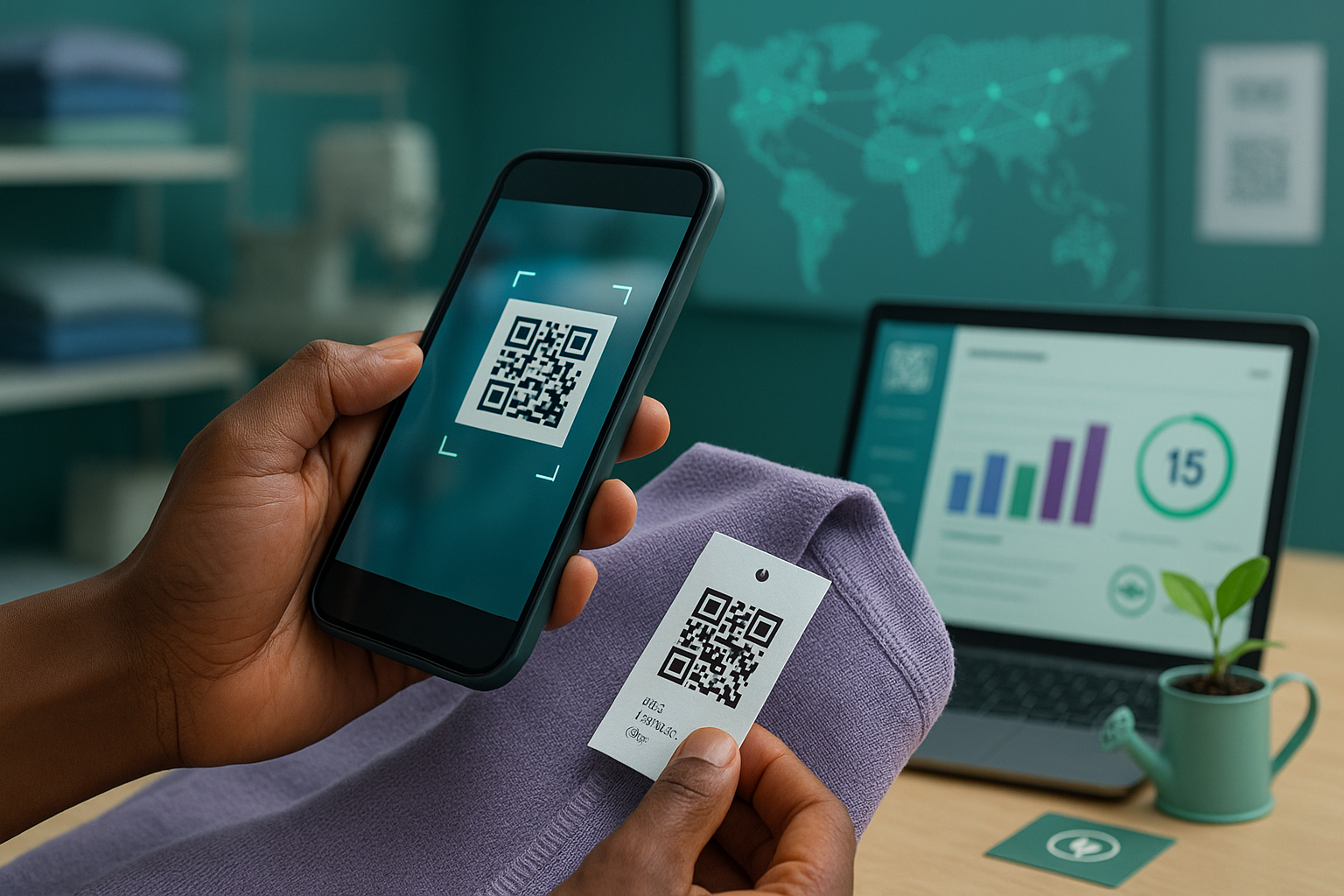

Every product sold in Europe will have to carry its own story (origin, composition, footprint and repairability), accessible through a QR code. This is the Digital Product Passport, and for anyone exporting to the European Union it is no longer a trend but a market requirement.
What the Digital Product Passport is
The Digital Product Passport (DPP) is an electronic record with detailed information about a specific item. Think of it as a "résumé" for each garment, shoe or accessory. It is accessed through a QR code, an NFC chip or a unique digital identifier linked to the product.
The logic is the same one driving the entire European regulatory agenda: fewer generic claims, more structured and verifiable data. The DPP requires machine-readable, interoperable and comparable information; in other words, information ready for enforcement.
The regulation that makes the DPP mandatory
The DPP is established by Regulation (EU) 2024/1781, known as the ESPR (Ecodesign for Sustainable Products Regulation), adopted by the European Commission in 2024. It connects to two broader policies: the Circular Economy Action Plan and the EU Strategy for Sustainable and Circular Textiles.
The point that matters most for companies outside Europe: the rule applies to any product placed on the European market, regardless of where it was made. Brands and suppliers outside the EU are in scope as long as they sell into the bloc.
Timeline: what starts in 2026
Implementation is phased by product category:
- 2024: adoption of the ESPR.
- From 2026: the first product groups become subject to the requirement.
- By 2030: gradual expansion to more categories.
The priority sectors at the start are textiles, apparel, footwear and accessories: precisely the long, fragmented supply chains with heavy exposure to the European market. Because building a product-level database takes time, the window before 2026 is shorter than it looks.
What data the DPP has to carry
For each product, the passport consolidates a set of information across the life cycle:
- Origin of materials and critical raw materials.
- Manufacturing processes and supply chain stages.
- Environmental impact, including carbon footprint.
- Durability and repairability of the product.
- Recyclability and instructions for use, care and disposal.
- Working conditions associated with production.
Gathering this data in a spreadsheet is not enough. The ESPR requires a structured, interoperable, machine-readable format, which puts growing pressure on companies to organize information at the source rather than at the end of the line.
How the DPP works in practice
Access is simple for the end user: a QR code, NFC chip or unique identifier on the product leads to a digital record. The complexity sits behind the label, mainly in making sure every data point shown is backed by reliable evidence rather than self-declaration. Without that, the passport becomes just another marketing label, which is exactly what the regulation aims to prevent.
The benefits go beyond compliance
- Transparency and traceability: standardized data for every stage of the value chain.
- Circular economy: durability and recyclability information enables repair, reuse and proper disposal.
- Fighting counterfeits: the unique identifier makes it possible to verify authenticity.
- New business models: clothing rental, recommerce and certified buyback get a reliable data foundation.
- Consumer experience: direct access to origin, care and maintenance information.
Why this matters for Brazilian companies
Brazilian fashion, footwear and accessories exporters selling to Europe fall within scope in the same way as the bloc's own brands. Even companies that sell only in Brazil are likely to face requests from global retailers and buyers who need traceable data for their own passports. The Brazilian challenge is rarely a lack of intent; it is the lack of structured, verifiable data by product and by supplier.
A DPP is only as good as the data behind it
A digital passport is credible only if the information it displays can be verified. That is where data infrastructure makes the difference. At Blockforce, the Digital Product Passport is not just a QR code: it is the surface of a supply chain that has already been qualified and traced in the preceding modules, with compliance geared to the EUDR, the ESPR and European due diligence requirements, and data presented to consumers or regulators backed by verified records.
Another important point: Blockforce's DPP is already built to the models and parameters of GS1, the global standard for product identification (such as the GTIN) and data exchange used by retailers and manufacturers worldwide. The advantage is direct: the passport "speaks" an internationally recognized language, so the data is interoperable and comparable across systems, retailers and regulators from day one, without locking the company into a proprietary format. That is exactly the kind of structured, machine-readable information the ESPR requires. It cuts integration rework and speeds up acceptance of the passport in different markets.
That backing comes from two layers: Supply Chain Screening, which qualifies suppliers with a history anchored on blockchain, and the Traceability module, which runs on our Trust Layer, the dual-ledger blockchain layer built for supply chains in general, recording every event immutably. It is the difference between showing a data point and proving it.
How to prepare for the DPP
Rather than treating the passport as a last-minute effort, the safest path is to build a single flow in which data is traceable from the moment it is created:
- Know and qualify your supply chain: map suppliers and assign risk, with an auditable history.
- Trace the product: record origin, processes and supply chain events with immutable evidence.
- Build the passport by SKU: connect origin, production, footprint and recyclability in a record accessible through a QR code.
- Stay audit-ready: treat every piece of information as verifiable, with source, date and owner.
Bottom line
The Digital Product Passport marks the shift from sustainability talk to product-level proof. With the first product groups subject to the rule as early as 2026 and expansion through 2030, companies that start structuring traceable data now will meet the requirement with less rework and more credibility.
The next step is practical: choose a product line exposed to Europe, organize its origin and supply chain around evidence and build a pilot passport. Book a demo of Blockforce's solutions and see how to turn the DPP from a regulatory obligation into a brand differentiator.
Source and further reading:
https://data.europa.eu/pt/news-events/news/eus-digital-product-passport-advancing-transparency-and-sustainability
https://eur-lex.europa.eu/eli/reg/2024/1781/oj
https://green-forum.ec.europa.eu/implementing-ecodesign-sustainable-products-regulation_en